DID YOU KNOW…
Restoration can sometimes be quite tricky for the beginner woodworker – even at the best of times! For example, do need to fix a broken handle, turn up a new knob, repair a wedge or true the wooden sole of your favorite hand plane? Check out our tips and tricks on a range of restoration and repair jobs.
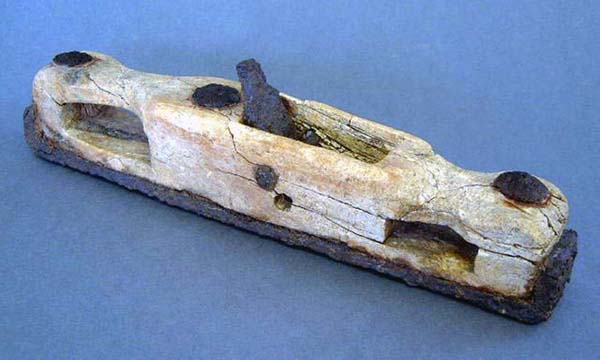
The Ancient Roman Plane Of Yorkshire Wolds
- Plane Old Archaeology In the Summer of 2000, while excavating for the BP Teeside-Saltend Etyhlene pipeline project near Goodmanham on the Yorkshire Wolds, it was discovered that under part of the proposed site lay a 1st to 5th century AD Roman-British village. While working near...
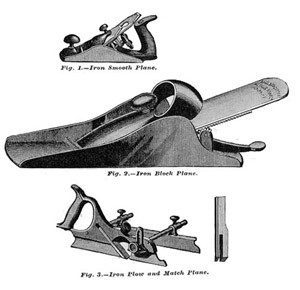
The Metallic Plane Company of Auburn, N.Y. – Manufacturer And Builder (April 1878)
- The article below first appeared in “The Manufacturer And Builder” in April, 1878, and highlights the benefits of metal planes produced by the Metallic Plane Company of Auburn, N.Y. While these articles were little more than advertisements in the trade papers of the day they...
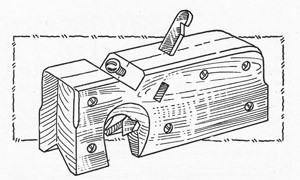
- Fig. 1: Handy plane for 1/4 inch and 3/4 inch dowel. The main body of the plane is in two pieces screwed together. If desired, a 1/16 inch chisel could be used for the cutter, the plane body being trenched to suit it. It is...
A Brief History Of The Woodworking Plane
- A beautifully decorated 17th or early 18th century plane, probably of German origin, in the Weston Park Museum, Sheffield, by whose kind permission it is reproduced. NOTE: The following article is from a small booklet by Stanley Tools in Great Britain which was printed sometime...
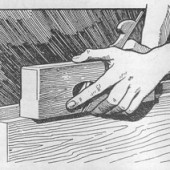
An Introduction To Understanding Rebate Planes
- The following article first appeared in the British magazine ‘The Woodworker’ in January, 1940. Here we take a look at the various rebate planes that are available, along with their use. At the end of the article there’s an advertisement for the author’s new book,...
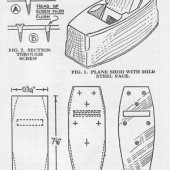
Shodding Your Smoothing Plane With A Steel Sole
- A disadvantage with wooden planes is that, when engaged in much repair work, the soles soon begin to show signs of wear. The smoothing plane seems to suffer the most, with the result that the sole has to be trued up frequently with an iron...
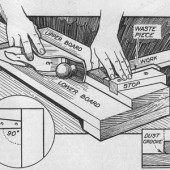
Shooting Boards And Donkey’s Ears – Appliances Used With Planes
- The following article first appeared in the British magazine ‘The Woodworker’ in December, 1939. It was part of a series of articles which would run throughout the rest of that year and into 1940. Part 6 focused on shooting boards and other appliances used with...
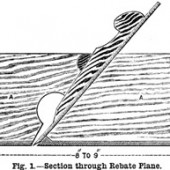
Planemaking – Casting An Iron Rebate Plane
- Fig. 1. — Section through Rebate Plane.NOTE: Click on image to enlarge. An Iron Rebate Plane. By A Foreman Pattern Maker. Purpose of Rebate Plane – Why Skew-Mouthed – Effect of Skew-Mouth – Pattern for Rebate Plane – Core Box – Prints – Mouth –...
Planemaking – Casting An Adjustable Block Plane
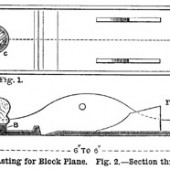
- Fig. 1. — Casting for Block Plane, in Section. Fig. 2. — Section through A A.NOTE: Click on image to enlarge. A Block Plane And Plane With Lever Adjustment. By A Foreman Pattern Maker. A word in season – Shell of Block Plane – Patterns...
Planemaking – Casting An Iron Chariot Plane
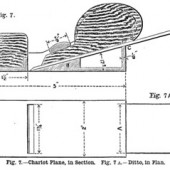
- Fig. 7. — Chariot Plane, in Section. Fig. 7 A. — Ditto, in Plan.NOTE: Click on image to enlarge. Home-Made Tools. By J. H. III. – An Iron Chariot Plane. In this article I will describe and illustrate a common iron chariot plane. The remarks...
Planemaking – Casting An Iron Smoothing Plane
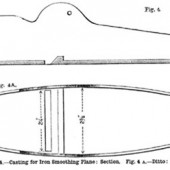
- Fig. 4. — Casting for Iron Smoothing Plane: Section. Fig. 4 A. — Ditto: Plan.NOTE: Click on image to enlarge. Home-Made Tools. By J. H. II. – An Iron Smoothing Plane. In this article I will describe and illustrate a common iron smoothing plane. Fig....
Woodworking Planes And Their Use
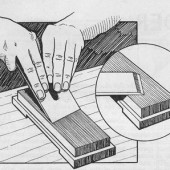
- The following article first appeared in the British magazine ‘The Woodworker’ in November, 1939. It was part of a series of articles which would run throughout the rest of that year and into 1940. Part 5 looked at planes and their use, and includes the...
What To Know About Planes – Choosing The Basic Tool Kit
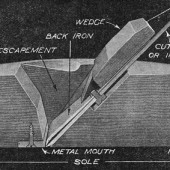
- The following article first appeared in the British magazine ‘The Woodworker’ in July, 1939. It was part of a series of articles which would run throughout the rest of that year — Part 1 being on the subject of choosing the basic tool kit. While...
Planemaking – Casting And Making An Iron Trying Plane
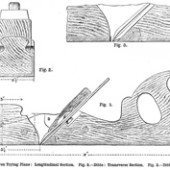
- Home Made Tools. Fig. 1. — Iron Trying Plane: Longitudinal Section. Fig. 2. — Ditto: Transverse Section. Fig. 3. — Ditto: Enlarged Section Of Mouth.NOTE: Click on image to enlarge. The following article is taken from the 1889 trade publication “Work” (Saturday, April 13, 1889...
Wooden Plane Making: Cutting Beech Plane-Stocks
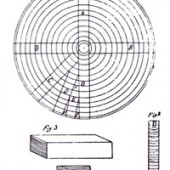
- When it comes to cutting and making the main body stock of a wooden hand plane its important to realize the fundamentals of planemaking. It goes without saying that wood is a very accommodating and expressive material, and its always on the move in one...
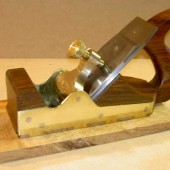
- While in business, the Shepherd Tool Company sold some 1000 kits and 450 finished infill planes of various descriptions, including smoothers, jointers, chariot planes and shoulder planes. The kits proved to be an affordable way for many woodworkers and beginner plane makers to embark on...

Interview With Plane Maker John Economaki
- John Economaki is widely known amongst fine tool aficionados for his wonderfully crafted woodworking tools, made from brass, steel and exotic rosewoods, which he first started to produce as a one-man enterprise way back in 1983. Since then the business has grown from strength to...
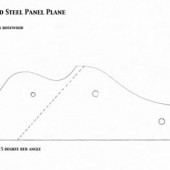
Spiers No. 1 Dovetailed Panel Plane (13-1/2″)
- These side plate profile drawings are from a later model Spiers No. 1 dovetailed panel plane and are offered more as a template for cutting out the side plates for dovetailing, rather than a full and comprehensive set of plans or diagrams. Typically the side...
 Loading ...